Thursday, 31 October 2013

Development of Thriller

How have they changed?

As there are more and more thrillers being made, each thriller adds a new concept or a technique devolving the genre from many of the previous films. Until today many thriller films share the same themes, ideas and have some of the same elements in them. However in current thrillers directors try to maintain their own individuality by making the film stand out from the others. We can tel thrillers have developed from what they once were. They used to be more psychological focusing on the mystery and creating tension for their audience. Now however there is more gore, blood and violence making them appear to be horror films rather than thrillers. A classical example of how thrillers have developed is the 'James Bond' films. A classical espionage thriller has developed to being more action packed compared to what it once was.     

 A trailer clip of one of the earlier Bond films 'From Russia with Love'. 

 A trailer clip from the modern action packed version of the latest James Bond in Sky fall.

Sub-Genres of Thrillers

Hybrids

In thrillers there are many sub genres which create thriller hybrids.To become different from other thrillers hybrids, are usually formed to create variety of suspense.Thrillers leave audiences gasping and at the edge of their seats for more.

Action Thriller


Action Thrillers involves a lot of action and fast editing to grasp the audiences attention creating suspense. The traditional action films are iconic for their chase sequences and stunts and battles. Action thrillers try to incorporate overall sense of danger the thriller genre is trying to achieve.
  
Further Examples of Action Thrillers are:
  • The Bourne Identity
  • The Dark Night & The Dark Night Rises
  • Die Hard
  • James Bond

Sci-Fi Thriller


Sci-Fi thrillers mostly revolve around the use of science and technology plays an important part within the narrative. The plot of course mostly revolves around genetically enhanced humans to creatures out of this world, help to create the suspense the audience expects. 

Further Examples of Action Thrillers are: 
  •  Inception
  • Transformers
  • Jurassic Park 
  • I Robot

Psychological Thriller 


In a psychological thriller film it emphasises, not on the plot but rather on the psychology of its characters. The suspense of a psychological thriller it stems less from a physical threat but  from a mental one.

Further Examples of Psychological Thrillers are:

  • Fatal Attraction
  • The Game
  • American Psycho 
  • Silence of the Lambs

 Legal Thrillers 


In Legal Thrillers the justice system is always a major part of the film at times being an extra functioning as one of the characters. In this way, the legal system provides the framework to which the narrative is based on.

Further Examples of Legal Thrillers are:
  • The Pelican Brief 
  • Primal Fear  
  • The Client
  •  A Few Good Men 
Romantic Thriller 


This sub genre merges the love of protagonists together, but it still creates suspense for the audience as it still has the thriller part of the film creating tension also, as well as anticipation for whether the protagonists will be together.

Further Examples of Romantic Thrillers are:
  • Casablanca
  • The Maltese Falcon
  • Mr. and Mrs. Smith
  • Armageddon 
Political Thrillers  


A political thriller is set against the backdrop of a political power and it usually involves various legal lots which are the main focus of the film and the writers design the narrative to give someone political power whilst opponents try to stop him or her. They often involve national or international political scenarios. political corruption, terrorism and warfare are common themes in Political Thrillers. 
Further Examples of Romantic Thrillers are:
  •  Notorious 
  • The Man Who Knew Too Much
  • The Manchurian Candidate
  • Salvador

Early Forms Of Thrillers

Early 1900s
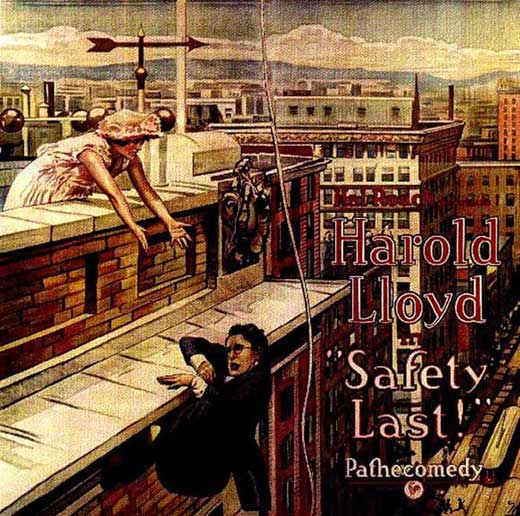
One of the most famous and earlier thrillers, released in 1923 was Safety Last. Last Safety is based on a young man played by Harold Lloyd, who takes on a dangerous daredevil stunt on the side of a skyscraper. is it a sub genre of thriller as it is also a silent comedy. The movie keeps the audience at the edge of their seats as the suspense is built as we are unable to tell whether he will make it or not.
 
M poster.jpg Later a thriller by Fritz Lang was the chilling German film M in 1931. the film is about a serial killer who abducts and kills children. It is based  on a real serial killer known as Peter Kurten. The narrative for M is very dark and mysterious common features of thrillers. This film creates vast amounts of tension because there are constant enigmas leaving the audience guessing what will happen. however the audience are at the edge of their seats wondering if the police will catch him for the terrible crimes.

Alfred Hitchcock

Hitchcock is one of the most influential director in thrillers. Over his lifetime he made over 50 films and within those 50 he had some of the most famous silent movies as well as thrillers.  
'No list of suspense or thriller films can be complete without mention of of English film-maker/director Alfred Hitchcock' - filmsite.org
 
The Lodger (1927) PosterHe helped to shape the modern-day thriller genre, starting with his early silent film The Lodger in 1927, it is based on a suspenseful Jack the Ripper story. it is based on an innocent man being chased down by society. New themes were introduced that relate to his later work. After his success with this film Hitchcock ventured into more thrillers. this became his preferred genre of film and even though he made just great work then it wasn't acknowledgment for its greatness until recently as many new thrillers use some of his most iconic films such as The Lodger, Blackmail in 1929 followed by  The Wrong Man in 1956 and many more.

PSYCHO Framed A4 Film Movie Poster Black Frame HitchcockHis most successful and well known is Psycho in 1960. At the time he had the opportunity to use colour in his films but decided to make his last thriller in black and white. What shocked audiences about this particular thriller is that the protagonist was killed very early on and was shocking because it questions how the rest of the film would carry on. Later on the violence and the early death of Marion in the famous shower scene were all elements of Hitchcock's final thriller and some of his best work. his work in thrillers helped to develop the genre today.

Since then thrillers of today borrow various themes and elements from past decades using them in thrillers today.

Monday, 28 October 2013

An Introduction to Thrillers

Thrillers, What are they?

A thriller is a genre in television, films and literature which uses the technique of suspense and tension to create excitement for their audience. Thrillers are often fast paced as they make the audience moods and giving them a sense of anticipation getting them anxious for what will happen as well as surprising them. This type of genre also has many sub genres with similar characteristics which represent various themes.

'A thriller is supposed to keep the reader or viewer on edge with suspenseful and sensational action'. -Wise Geek

Many people would often confuse a Thriller film for Horror.  However these two genres are closely related they are still very distinct. Horror films will be more graphic, the audience will feel fear and disgust compared to Thrillers which will create tension and suspense for the audience. Audience members however expect suspense from both genres.

Features of  Thrillers

Many features in thrillers are used to add and create effect in the narrative and keep the audience engaged at all times. Some of theses features are:
  • Anticipation
  • Anxiety
  • Enigmas (mystery)
  • Intense Excitement 
  • Plot Climax
  • Suspense
  • Tension

The main characters in thrillers are usually placed in very menacing situations where escaping was almost impossible. The protagonist unaware is often placed in a dangerous situation. this greats irony as the audience is unaware of this and it leaves the audience wondering what will happen to the protagonist. the menace (antagonist) of the thriller is abstract, uncertain and shady making it harder to spot who they are.

Thursday, 24 October 2013

Preliminary Task

The Preliminary Task

The brief of the task is as follows:

“A continuity task involving filming and editing a character opening a door, crossing a room and sitting down in a chair opposite another character, with whom she/he then exchanges a couple of lines of dialogue. The task should demonstrate match on action, shot/reverse shot and the 180-degree rule.”


Match On Action
Match on action is a very simple but essential technique, where the perspective of the camera changes during a scene and the scene continues to flow. If a character begins an action in the first shot and completes it in the next, a visual “bridge” is created which acts to disguise the cut from one to another. So you have one piece of action (opening and walking through a door) filmed in three separate stages, but edited together to present the audience with continuous action.
Shot Reverse Shot
Shot reverse shot is a film technique wherein one character is shown looking (either on screen or off screen) at another character, and then the other character is shown looking “back” at the first character. Since the characters are shown facing in opposite directions, the view unconsciously assumes they are looking at each other.  
180 Degree Rule
The 180 degree rule is a basic film editing guideline that states those two characters (or other elements) in the same scene should always have the same left/right relationship to each other. If the camera passes over the imaginary axis connecting the two subjects, it is called crossing the line. The new shot, from the opposite side, is known as a reverse angle.

Story Board
We had to story board our idea at the beginning of the task. This enabled us to stay focused on what we wanted to achieve when we got to the stage of filming. We planned out each shot and camera angle in the story board so that we knew exactly what we had to do and did not get distracted. This also helped us visualise our final product and ensure we included everything we needed to in the film. 


The first page of the story board.
It includes the initial 4 shots of the film.
The second page of the story board.
It includes the final 4 shots of the film.

We used this story board as a guideline for our film and this meant that the sequence was not an exact match. The location we were in meant that we had no access to the props we initially built in to the plan, for example a classroom desk and chairs. Instead we filmed the conversation with the two characters talking whilst sitting on a bench. The characters were also different, in the story board we portrayed them as a girl and a boy but when it came to filming the characters were two girls. The ambient sound was also different because it is not set in a classroom. Apart from these changes we managed to keep to the different camera shots and also to the timings of the shots. 

The Video


The filming went very well overall, even though we did encounter a few problems along the way. For our panning shot, when the character walks through the door and across the room, we found that the camera was very stiff and so we couldn’t pan fast enough. It also meant that the footage we collected had kinetic movement and this is not what we were aiming for, we had to film this shot many times before we were satisfied. Another aspect that we had to take into account was the background noise. We did intentionally want ambient noises from school but our camera picked up all the surrounding environment sounds. This meant we had to wait for the footsteps down the hall and the students’ chatting to die down because it would have meant different sounds would be heard after the footage had been edited. We included the three requirements for the task and we had no difficulty with the filming techniques. When we filmed we made sure that each action was filmed all the way through, with extra time left before and after so that nothing was left out and so we could make the editing easier for ourselves. 

Editing
When we were editing the footage we collected it was quite tedious because we had 7 minutes worth of film to sieve through. We wanted to make sure that we hadn’t missed anything out during the filming process and so we actually had too much footage in the end. This made the editing process a lot longer than we expected and I think we will try to keep better timing and an account of how many takes we are filming during our opening sequence process. In the end the 7 minutes of footage was compiled into, approximately, a 30 second clip. We found it hard initially to use the software we needed to edit the film but we once we had got used to it and worked out the tools we needed to use everything went smoothly from that point on. We tested out the different takes of the shots we needed and as a group decided which ones worked best. Afterwards, we were able to add some effects, such as “fading to black” at the end of the sequence. We also added transitional effects to make it more entertaining. 

Preliminary task


As part of the coursework our group had to complete a preliminary task. The brief we were given for the task was: "A continuity task involving filming and editing a character opening a door, crossing a room and sitting down in a chair opposite another character, with whom she/he then exchanges a couple of lines of dialogue. This task should demonstrate match on action, shot/reverse shot and the 180 degree rule."
"Match on action" is when different shots are edited together so it appears to be one continuous action.
We used this technique for editing the character walking through the door, so we filmed her pushing the door from one side and entering the room from the other side but it appeared to all be one action because we matched the timing and pace of the different shots. It is difficult to edit it to have perfect timing so our match on action in this preliminary task was not flawless but it is not so bad that it disorientates the audience.
"Shot reverse shot" is usually used during conversations between characters as it films  one character facing one way then the next shot of a different character facing the opposite way before revisiting the previous shot of the first character. This allows the audience to see the two characters are facing each other and exchanging dialogue. We use three different shots for this, but two of them are from the same angle to show the protagonist talking. Although we didn't move the camera more than 30 degrees for the two shots of the protagonist speaking it doesn't matter because there is a shot in between them of the other character so it doesn't appear as though the character has moved unnaturally.
"The 180 degree rule" is to help orientate the audience. As the audience can only see what the camera films, it is important that characters stay in position. By following the 180 degree rule the camera cannot cross an imaginary axis (of 180 degrees) because the characters will appear to have switched positions which will confuse the audience. The 180 degree rule ensures that if John is on the left, he remains on the left, and if Tim is on the right, he remains on the right.

To plan our preliminary task we did a storyboard of all the shots we would  film, showing the angles and what type of shot it is e.g. medium close up or long shot. Storyboarding makes filming easier because we already know what we want to do so we can just get on with it. For example we had already planned to include an overhead shot of the characters so we didn't have to waste time deciding where to film it from. It was especially useful for the match on action because we knew where to position the camera and what angles we wanted of the different shots. This enabled us to make sure the shots flow smoothly so it looks like a continuous action. The storyboard was also a helpful guideline of how many seconds each shot would be, although our final product was only about 30 seconds long. By planning the filming on the storyboard it makes it easier to avoid breaking the 180 degree rule because we would see in the drawings if the rule appeared to be broken. Our final product is not an exact replica of the storyboard because the characters are different, the location is slightly different and the sounds are different. Instead of filming a boy and a girl we filmed two girls but this is not important to the task as we still followed the brief. The location is in the theatre rather than a classroom  so we were not able to use a table and chairs as props however we improvised and still used the same shots that we planned. The sounds we planned in the storyboard we ambient sounds from a classroom, however because we weren't in a classroom these sounds were not present. As there were other groups filming their preliminary tasks in the surrounding areas the camera recorded some ambient noise from them but it does not affect our final product.

The filming process had its challenges when there were several groups wanting to film in the corridor but we sorted it out and each got the necessary shots we desired. The camera was easy to use and we were able to review our footage so we could decide if we were satisfied or if we wanted to do another take. We used a tripod to keep the camera steady and make the final piece look more professional. The tripod allowed us to tilt and pan the camera as required. Although the dialogue didn't record very well it is clear a conversation is taking place so I think our task was successful.
To edit our footage we used i-movie, a software programme available on an apple mac book. Although we weren't familiar with the programme we found it quite straight forward. We imported all our shots and then split and deleted them until we had the final product. The most difficult part of editing was getting the timing perfect for the match on action. If it was a fraction of a second out of time the character appeared to jump in time and it did not look realistic. The timing is not 100% accurate but it is good enough for the action to look continuous. We added in some transitions but did not think a score would make a massive difference to the clip. Our final product is about 30 seconds. It could do with being a bit longer however we met the criteria and showed that we have the skills to film and edit so it is sufficient for the task.

Preliminary Task


Preliminary Task
Last week we stared to look at a preliminary task which would be part of the final coursework to making out opening sequence of a Thriller.The brief for our preliminary task was:
"A continuity task involving filming and editing a character opening a door, crossing a room and sitting down in a chair opposite another character, with whom she/her then exchanges a couple lines of dialogue. 
The Task Should demonstrate match on action, shot/reverse shot and the 180 degree rule."
To be able to complete this task, my group and I had to create a storyboard in order to be able to have an idea of how and where we would be filming and we would be prepared. the storyboard will ensure we included everything we needed to in the film.
The first page of our story board. 
 The second page of the story board.
Match On Action
A common technique used  to cut from one shot to another view that matches the action that has taken place in the first shot. The use of match on action creates continuity. If a character begins an action in the first shot and completes it in the next, a visual 'Bridge' is created which acts as a disguise the cut from one to the other. This makes the scene flow.
For example, opening and walking through a door is filmed in three separate stages, but it is later edited together to make it appear as if it was filmed continuously.

Shot Reverse Shot  
Shot reverse shot is a film technique wherein one character is shown looking (either on screen or off screen) at another character, and then the other character is shown looking “back” at the first character. Since the characters are shown facing in opposite directions, the view unconsciously assumes they are looking at each other.   

The 180 Degree Rule
The 180 degree rule is a basic film editing guideline that states those two characters (or other elements) in the same scene should always have the same left/right relationship to each other. If the camera passes over the imaginary axis connecting the two subjects, it is called crossing the line. The new shot, from the opposite side, is known as a reverse angle.

The Final Video 


When we started the filming it went very well because we had a clear vision for what we wanted the end production to look like. However with anything there were a few difficulties along the way which we manged to clear up. We were not able to pan as smoothly as we like because the tri-pod was very stiff when turning so it made our work look like kinetic camera movement. There was also trouble with the sound because the camera its self picked up a lot of ambient sound even though that it what we were going for we did not want them to be very loud. A lot of noise from students walking up and down the corridor made it hard to hear the characters on scene because they were not heard. to avoid this we had to re shoot some of the footage Overall we did not have as much trouble filming and we are very happy with the final product.

Editing
When it came to editing all our footage together we used iMovie on a Mac Book laptop to put it all together. With all the footage we shot we had almost 7 minutes worth of different shots, although we did not need to use all of them. The final clip is only 33 seconds long. The editing was longer than we anticipated because of all the footage we had, as we had to go through it all and make sure that we got what we needed. We initially struggled with how to use the software, but we got the hang of it. We added effects to our clip such ad fade to black at the end and had a scrapbook theme layout as it transitioned from shot to shot.